What is the Acatenango Hike and what should you expect?
The Acatenango Hike is a two-day trek up Guatemala’s Acatenango Volcano, offering stunning views of erupting Volcán de Fuego. Expect steep, dusty trails, cold nights, and a challenging but unforgettable adventure with breathtaking scenery.

The Volcano Hike
That’s immediately what comes up anytime Guatemala is mentioned. No context, no details… just “you have to do the volcano hike.”
I hadn’t even heard of it when I originally booked my flight. Yet somehow, it became the main event of my trip before I even knew what it was called.
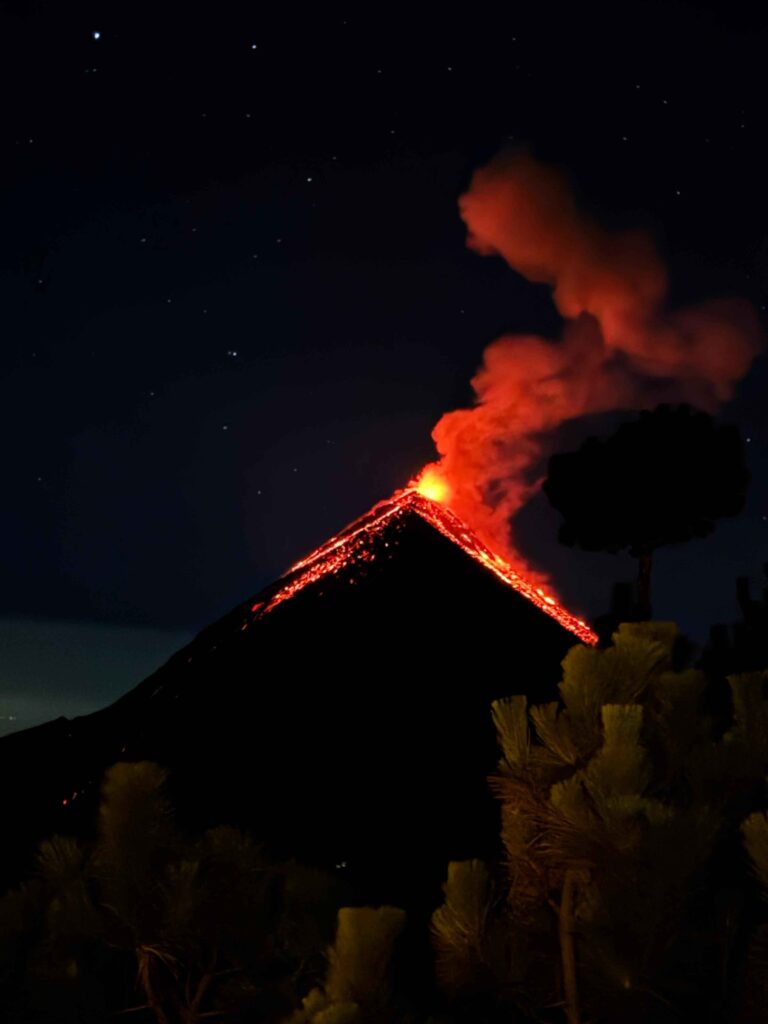
So naturally, I went down the research rabbit hole, and about a month later, in January 2026, I found myself halfway up Acatenango Volcano, watching lava explode out of Volcán de Fuego… from a port-a-potty.
Not exactly how I pictured it, but honestly? Iconic.
I wanted to write down my experience from start to finish so anyone else thinking about doing “the volcano hike” actually knows what they’re getting into. So here’s a real, no-sugarcoating rundown of what to expect, based entirely on my experience.
What is the Volcano Hike?
The Volcano hike (aka. Hike Acatenango) is a two-day, one-night hike up the Acatenango mountain that overlooks Antigua and the Fuego volcano.
It’s freaking awesome.
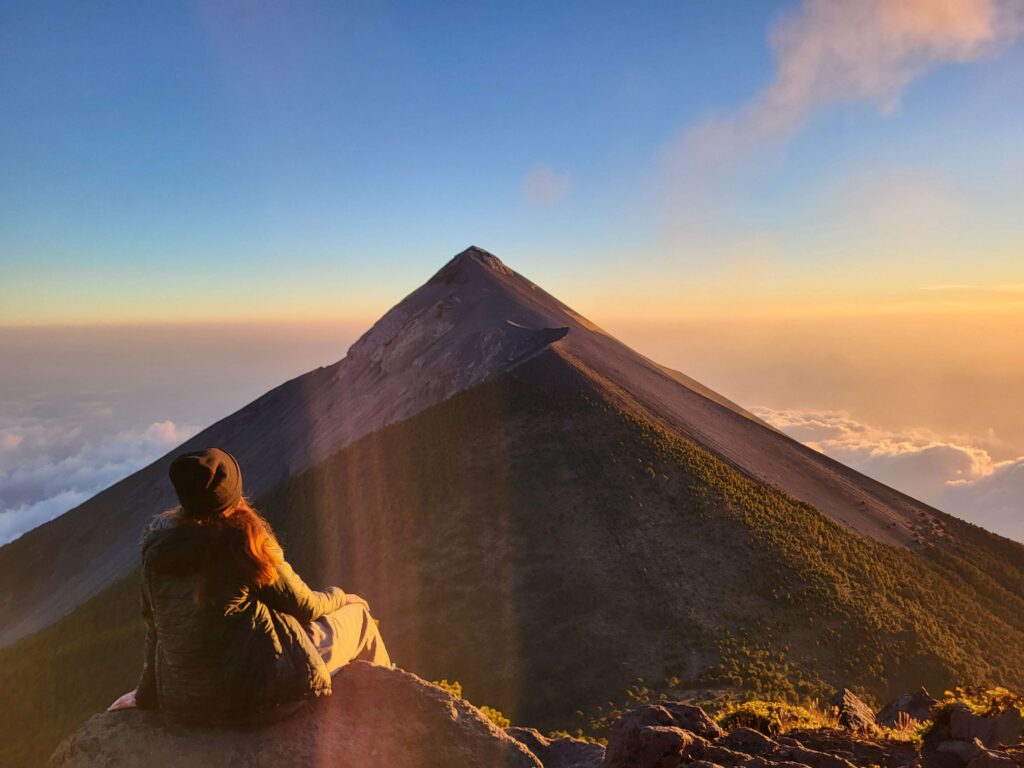
Let me tell you, it’s worth the hype. It’s hard, but the views are unmatched. Everyone had seen the photos. The epic views, glowing lava, people casually sitting above the clouds like it’s no big deal. That was all it took for me to think, “Yep, I’m doing that.”
How often do you get to see an erupting volcano? And it erupts every 20 minutes! So if you have good weather, you have an never ending show of big booms and pretty colors.
What those photos don’t show you, though, is the dust that gets everywhere, the relentless uphill climbs, the freezing nights, and the full-on motivational speeches you’ll be giving yourself just to keep moving.
I hiked with Lava Tours, and they were absolutely amazing! However, they are also slightly more expensive compared to other companies because they offer the bunked sleeping huts with clear views of the volcano.
Many other companies arrange hiking trips up Acatenango. These companies often include hiking rentals, transportation, food for both days, and night accommodation on the mountain path.
Also worth mentioning, you don’t have to hike with a company if you’d prefer to hike alone. There is a fee to enter closer to the top of the mountain for those who didn’t pay it with a tour, and you need to inquire about sleeping conditions beforehand, but it is possible.
Acatenango Hiking Overview
Because I’m a lazy writer, I’m just going to give you a list overview of the hike and what to expect with it.
First things first: this is one of the top things to do in Guatemala. Which means… yes, it’s busy. Very busy. If you can, book your hike in advance to avoid missing out or being stuck with a less ideal tour group.
Also, let’s be clear: this is a hard hike. I don’t care if you’ve climbed mountains before or if your main form of exercise is walking to the fridge; this one will challenge you.
The day starts with about a 1.5-hour drive from Antigua Guatemala to the base of the mountain. From there, everything is broken into sections, which, honestly, is the only thing that kept me going.
Hike is split into sections
The entire experience is structured in a way that makes it feel slightly more manageable. Think of it as checkpoints for your sanity.
The morning is very much a “pick up, gear up, listen up” situation. Once everyone in your group is assembled and acquainted, you’ll head to the company’s base to sort out gear, water, and safety instructions. After that, you’re shuttled to the trailhead where the real fun begins.
The hike itself is split into three sections, for breaks to help keep morale from completely collapsing. Here’s what to expect:
The beginning
Chaos, dust and regret.
The first section is the toughest.
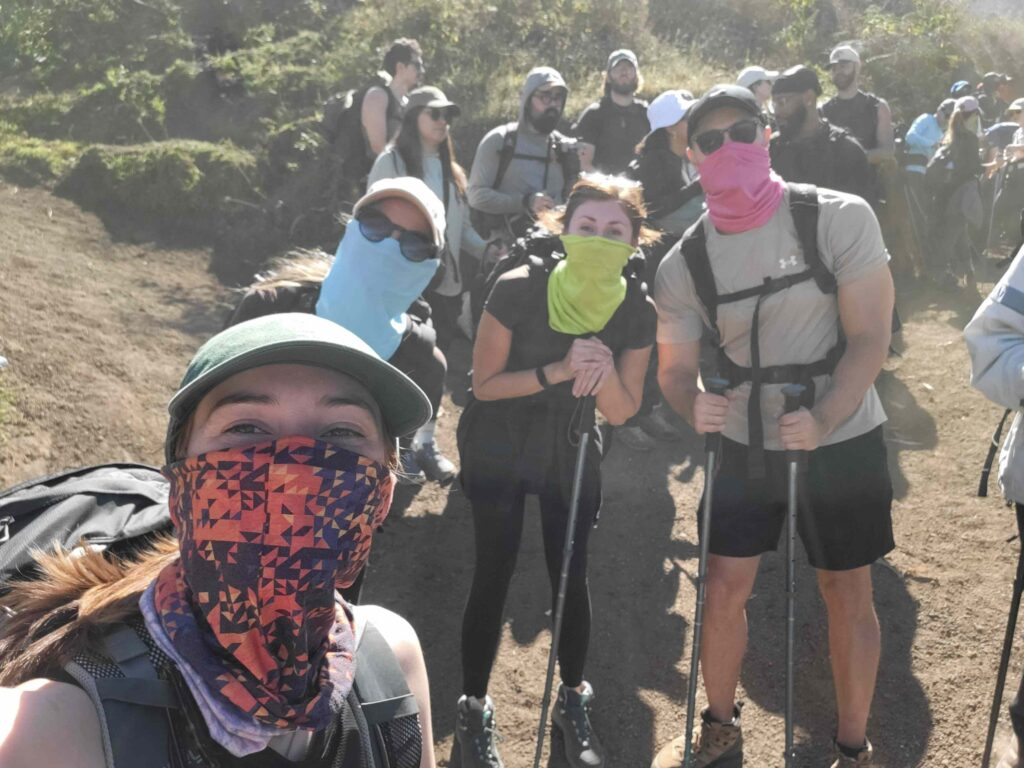
It’s almost entirely sand, which makes every step feel like you’re sliding backwards. On top of that, it’s extremely busy, with groups starting at the same time and people coming down in the opposite direction. It’s a bit of a traffic jam.
There are also narrow, single-lane sections lined with barbed wire as you pass through local farms, which adds a little extra spice to the experience. There’s basically no shade, and the dust is relentless, so definitely bring something to cover your face unless you enjoy inhaling dirt.
This is the part where you’ll question your life choices.
Middle
The false sense of hope.
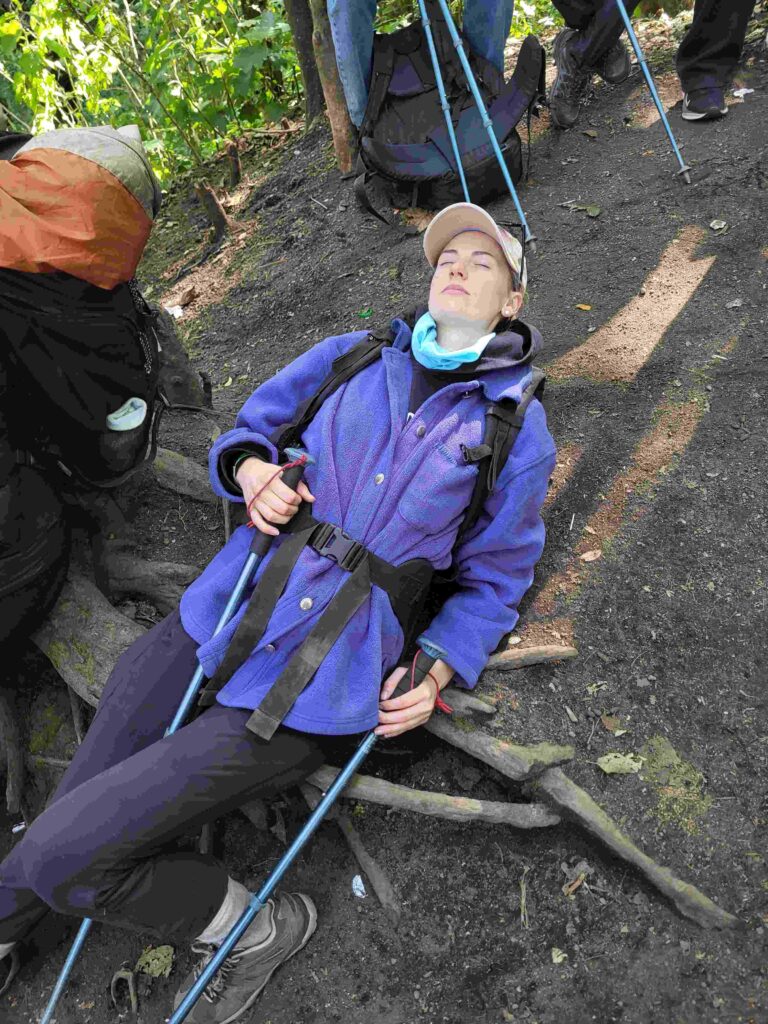
Eventually, the terrain shifts into a mix of dirt, gravel, and stairs, and you’ll start hiking through forested areas. The tree cover is a gift, especially after the exposed beginning.
The groups start to spread out here, so it feels a bit more peaceful. You can actually hear yourself think again.
That said, the moment you stop moving, you’ll notice the temperature drop pretty quickly. It starts getting chilly, so layering becomes important.
This section usually ends with a lunch break at a scenic lookout, which is both beautiful and slightly misleading, because you’ll think, “Wow, I’ve got this.”
You don’t. Not yet.
End
Fooled by the ‘Guatemalan Flat’.
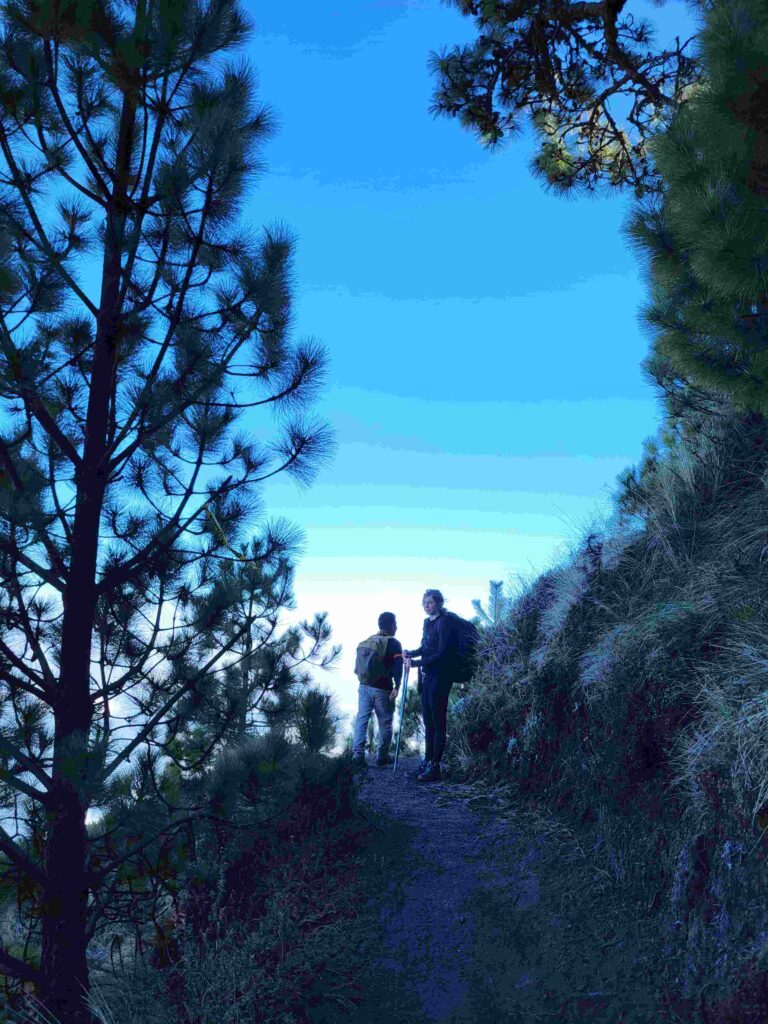
The final stretch is a mix of sun-exposed and shaded areas, with fewer people around since everyone is now spread out based on pace.
It’s technically the easiest part of the hike, with most of the intense uphill behind you. Locals call this section “Guatemalan flat,” which basically means smaller rolling hills that are still… uphill.
By this point, you’re tired, dusty, and running on snacks and determination. But, base camp is close, and that’s all that matters.
How long is the Acatenango Hike?
The Acatenango Hike typically covers about 13-15 kilometers (8-9 miles) round trip. Most hikers spend 5-6 hours ascending to base camp on the first day, with an additional 1.5-2 hours for the optional summit hike at sunrise. The descent usually takes 3-4 hours. The total hiking time, including breaks, is around 8-10 hours over two days.
Acetenango Hike elevation gain
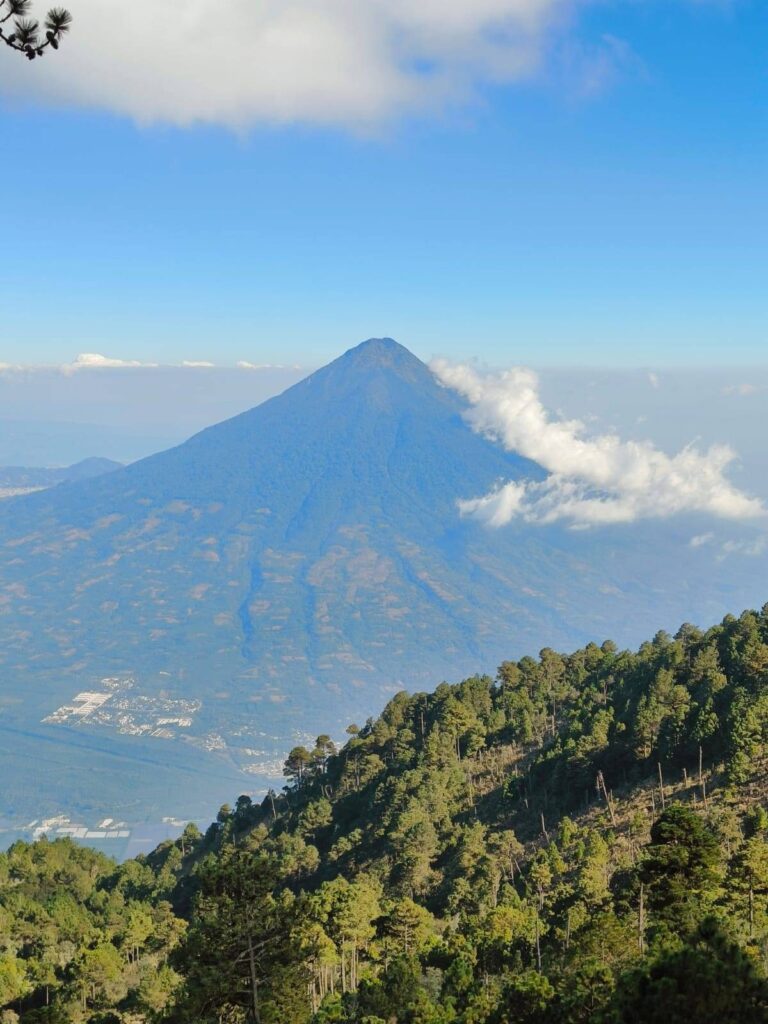
The hike starts at roughly 2,400 meters (7,874 feet) and climbs to the summit at 3,976 meters (13,045 feet). You gain about 1,576 meters (5,170 feet) in elevation. The steep ascent and high altitude make this a challenging trek, so acclimatization is important.
Altitude
This hike is high. Like, really high.
As you climb, the air gets thinner, which makes breathing harder and can lead to altitude sickness, and that’s not something to mess around with.
Symptoms can include dizziness, shortness of breath, nausea, fever, and dehydration. The tricky part is that altitude affects everyone differently, so you won’t know how your body will react until you’re up there.
A few things that help:
• Consider taking altitude sickness medication a few days before the hike
• Stay hydrated (electrolytes are your best friend)
• Go slowly, slower than you think you need to
• Spend a couple of days in Antigua Guatemala beforehand to acclimatize
Base camp layout depends on your company
Base camp setups vary depending on the company you book with, but generally, you’ll have a few options.
Some people stay in tents, which are the cheapest but also the coldest. Others opt for shared sleeping setups with rows of beds, which are slightly warmer. If you splurge, you might get a bunkbed-style cabin like I did, which is the warmest (but still not exactly cozy).
No matter where you stay, all the camps are positioned facing Volcán de Fuego, which means you get front-row seats to actual volcanic eruptions.
Yes, it’s as insane as it sounds.
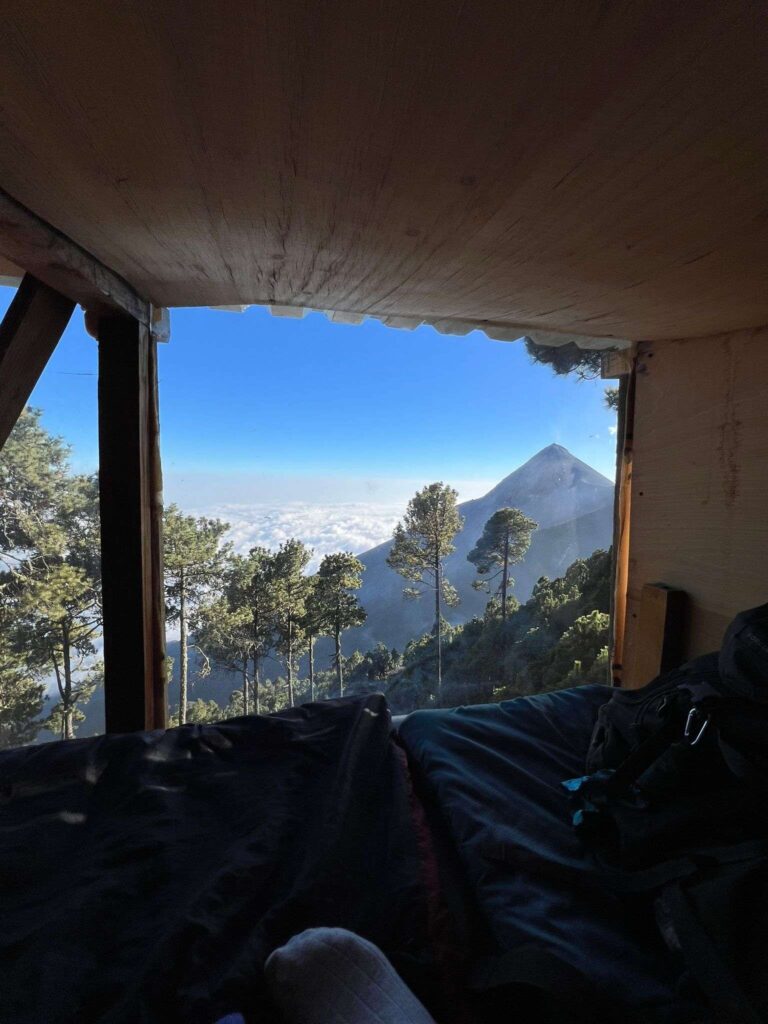
Breakdown:
• Tents – cheaper but cold
• 16-person side-by-side beds – mid price range but less cold
• Bunkbed cabins – higher range but warm(ish)
• All the base camps are spread out along the mountain but face toward the Fuego Volcano so you can see the eruptions from the camps
Weather when hiking Acatenango
Mountain weather does not care about your plans.
Conditions can change quickly and dramatically, so you need to be prepared for sun, rain, wind, and cold. Sometimes all in the same day.
Bring proper rain gear for both you and your bag, and pack layers. Lots of layers.
At night, temperatures can drop to around -5°C, so don’t forget essentials like a hat and gloves unless you enjoy freezing.
Optional Hikes from Acatenango
The Fuego Hike
This is an optional add-on that costs extra, but it’s one of the most unique experiences you can have.
After reaching base camp you can drop your bags and hike for about four hours round-trip toward Volcán de Fuego. It takes you really close to the eruptions.
It’s an incredible experience, but it’s also a tough hike, especially since it’s done in the dark. You’ll usually get back to camp around 9 or 10 p.m.
The hike costs about 150 – 200q extra, which is paid at the end of the hike.
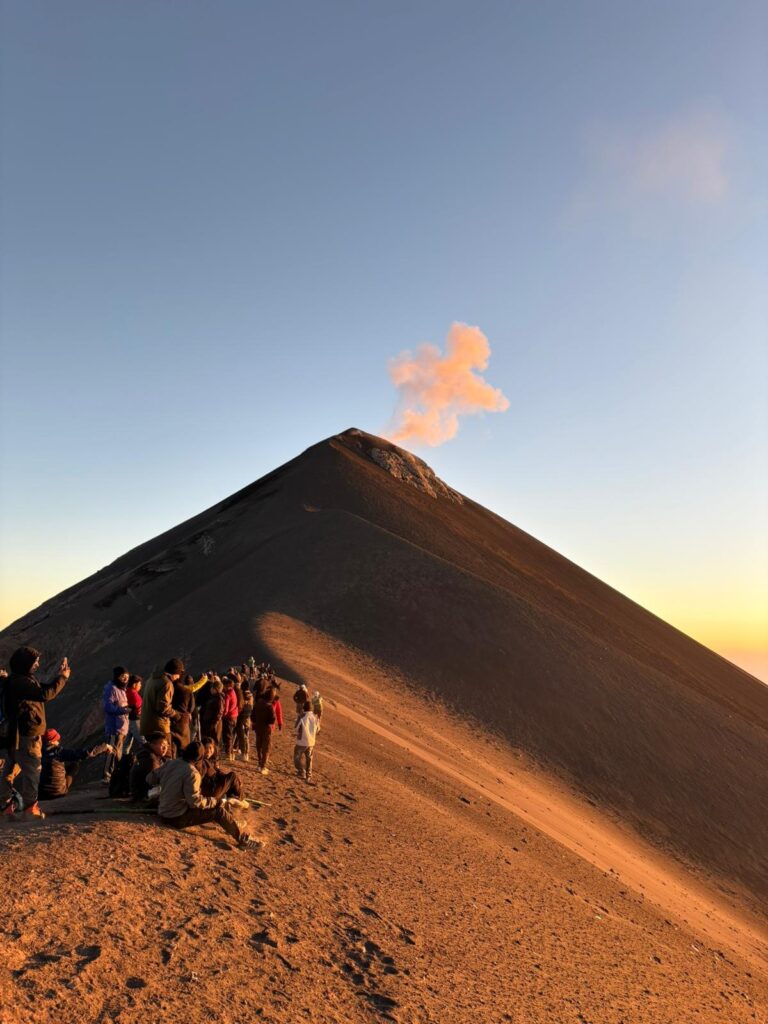
The Morning Summit Hike
This one is usually included in your tour, but it’s optional.
Wake-up time is around 3–4 a.m.
The hike to the summit takes about 1.5 hours, and while it’s challenging, the payoff is huge. Watching the sunrise over Antigua Guatemala with eruptions happening beside you is something you won’t forget.
And the best part? Running back down the sandy slopes like a chaotic child.
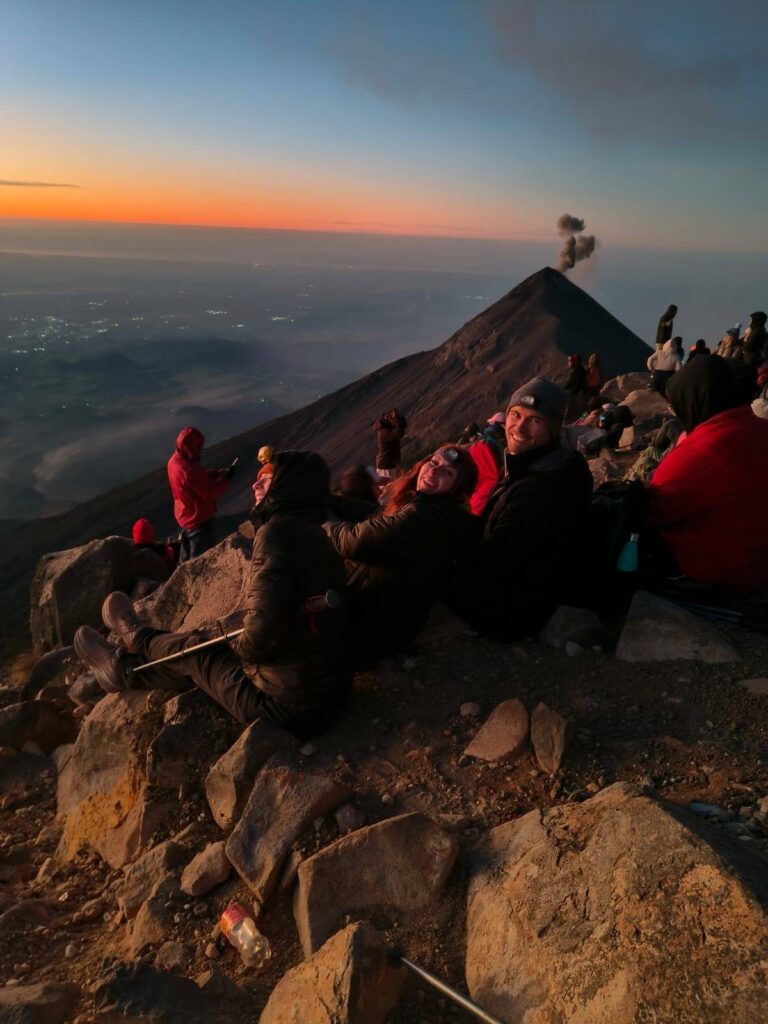
What is provided for the Acatenango Hike (Depending on the company)
Depending on your tour company, a lot of gear can be rented or included.
You’ll typically get things like water (around 4L, though some is used for cooking), meals (lunch and breakfast), and a headlamp. Other items like backpacks, hiking poles, warm clothing, and sleeping liners are usually available to rent.
That said, the rental gear can be bulky and not always ideal for hiking, so if you have your own equipment, I’d recommend bringing it.
• 4L of water (1L will go to cooking dinner) (included)
• Head lamp (included)
• Lunch & breakfast (included)
• Bag (for rent)
• Hiking poles (for rent)
• Jackets, warm pants, socks (for rent)
• Hiking shoes (for rent)
• Sleeping liner (for rent)
What to pack for the Acatenango Hike
Packing smart can make or break your experience. Here is a quick rundown of what I would suggest having with you during the hike.
• 40-50L bag (can rent if needed)
• Sun screen (high altitude = high UV)
• Snacks
• Electrolytes
• Puff jacket
• Gloves
• Hat
• Buff (it gets dusty)
• Sleeping liner (yours will be cleaner)
• Extra socks
• Toilet paper + hand sanitizer (none available on the mountain)
• Hat (for shade)
• Sunglasses
• Warm fleece sweater
• Warm pants (for sleeping)
• Camera
Final Thoughts
Hiking Acatenango Volcano is not easy. It’s dusty, steep, cold, and at times feels never-ending.
But it’s also one of the most unique and unforgettable experiences you can have in Guatemala.
Between the challenge, the views, and watching Volcán de Fuego erupt in real time, it’s the kind of adventure that sticks with you long after your legs stop hurting.
Would I do it again?
Ask me when my quads fully recover (yes).
Key Takeaways
- Acatenango Hike is a two-day, one-night trek with epic volcano views.
- Expect steep, dusty trails and cold nights—prepare with layers and gear.
- The hike gains about 1,576 meters in elevation and is physically demanding.
- Optional Fuego and sunrise summit hikes add to the adventure.
- Guided tours provide gear, meals, and logistics, but solo hiking is possible.
Where and how to book the Acatenango Hike
This is such a popular hike that it is easy to find a company online to book with. Many people also book with their hotels or hostels when they arrive with is also an option.
I often use GetYourGuide to find tours that are interesting, or to at least get information about companies and reviews.
Booking.com also has an attractions page that offers some good insight on activities to do in the areas you want to stay.
FAQ
How long does it take to hike Acatenango?
The hike usually takes 5-6 hours to reach base camp, plus 1.5-2 hours for the summit. The descent takes about 3-4 hours, making the total hiking time 8-10 hours over two days.
What is the elevation gain on the Acatenango Hike?
You gain approximately 1,576 meters (5,170 feet) from the trailhead to the summit, starting at 2,400 meters and reaching 3,976 meters.
Is the Acatenango Hike suitable for beginners?
The hike is challenging due to steep trails and high altitude. Beginners can complete it with preparation, acclimatization, and a slow pace, but it’s best for those with some hiking experience.
Is the Acatenango Hike difficult?
Yes, the Acatenango Hike is considered strenuous. The steep, sandy trails, high altitude, and rapidly changing weather conditions make it a tough challenge even for experienced hikers. Most people find the first section the hardest, but the entire hike requires good fitness and determination.
What should I pack for the Acatenango Hike?
Pack layers, a warm jacket, gloves, hat, snacks, electrolytes, sunscreen, and a headlamp. Bring extra socks, a sleeping liner, and rain gear. Some gear can be rented from tour companies.
Can you hike Acatenango without a guide?
Yes, it’s possible to hike Acatenango independently, but most people join guided tours for safety, logistics, and gear support. There’s an entrance fee for independent hikers.
How does Acatenango compare to Kilimanjaro?
Kilimanjaro is higher and longer, but Acatenango’s steep, rapid ascent makes it feel intense. Many find Acatenango’s summit day especially tough, though Kilimanjaro is a multi-day trek.